

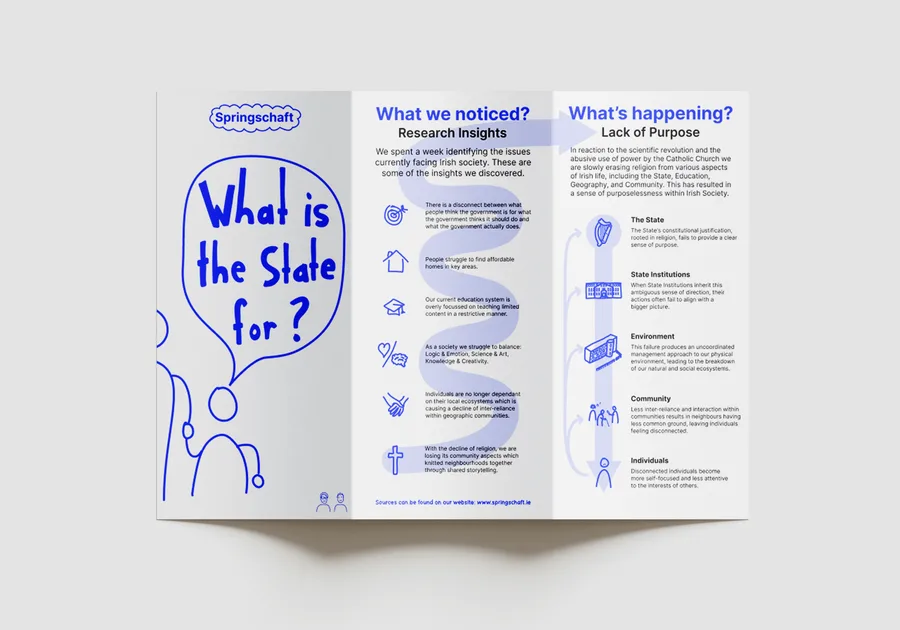

Research
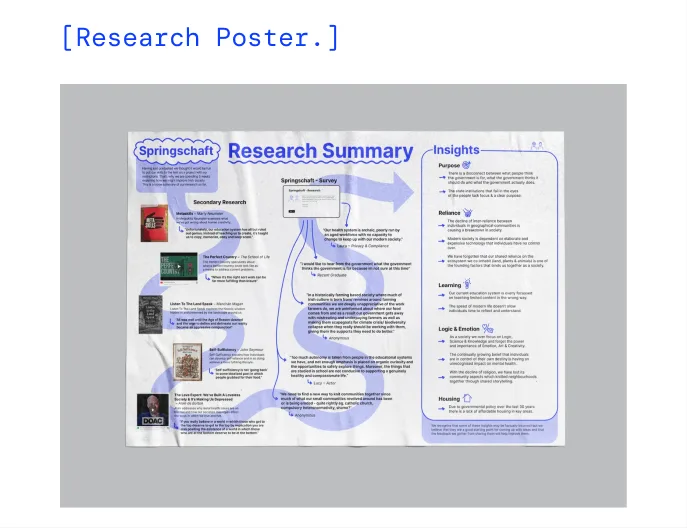
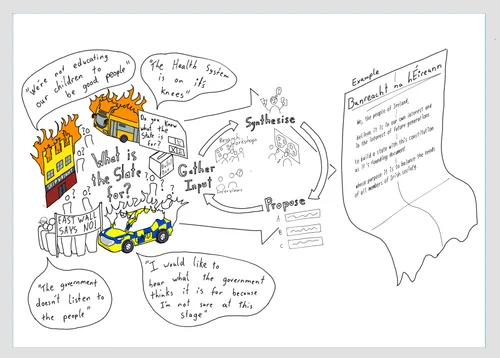
We wanted to understand how people experienced modern Ireland from as many perspectives as possible. Books, conversations, workshops, surveys, and interviews helped us build a richer picture of the systems shaping everyday life.
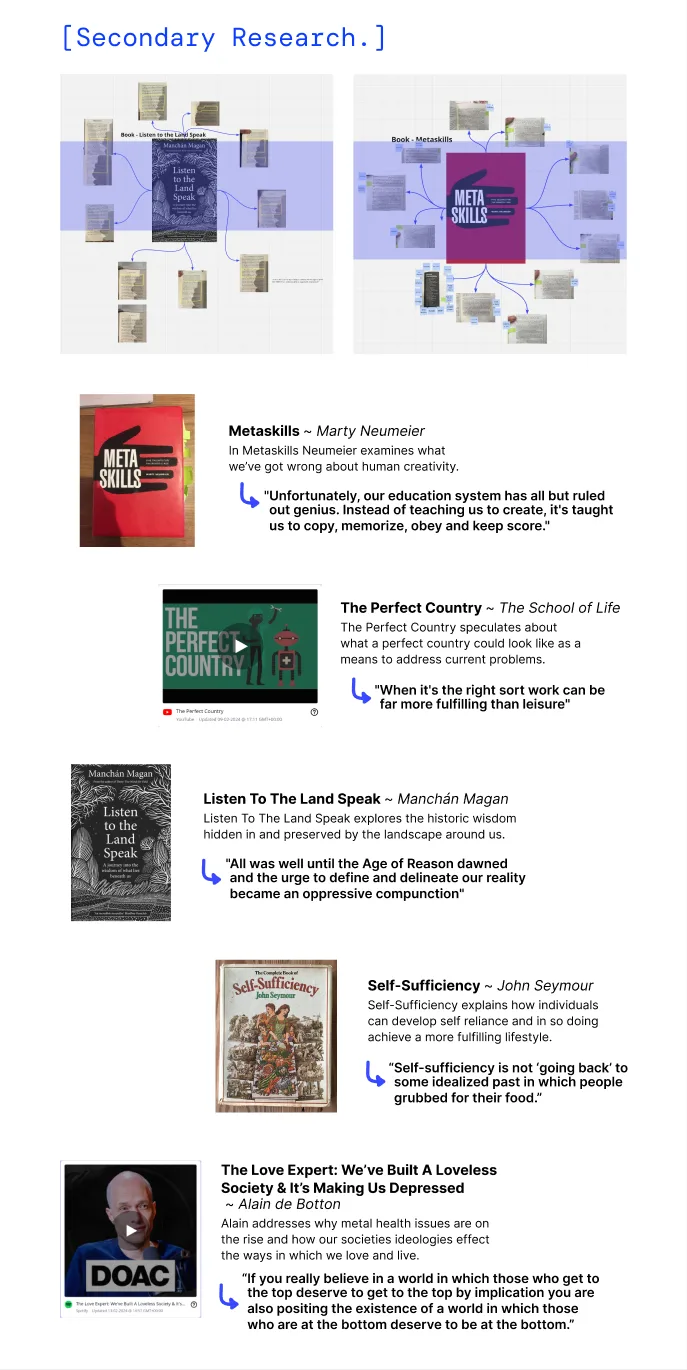
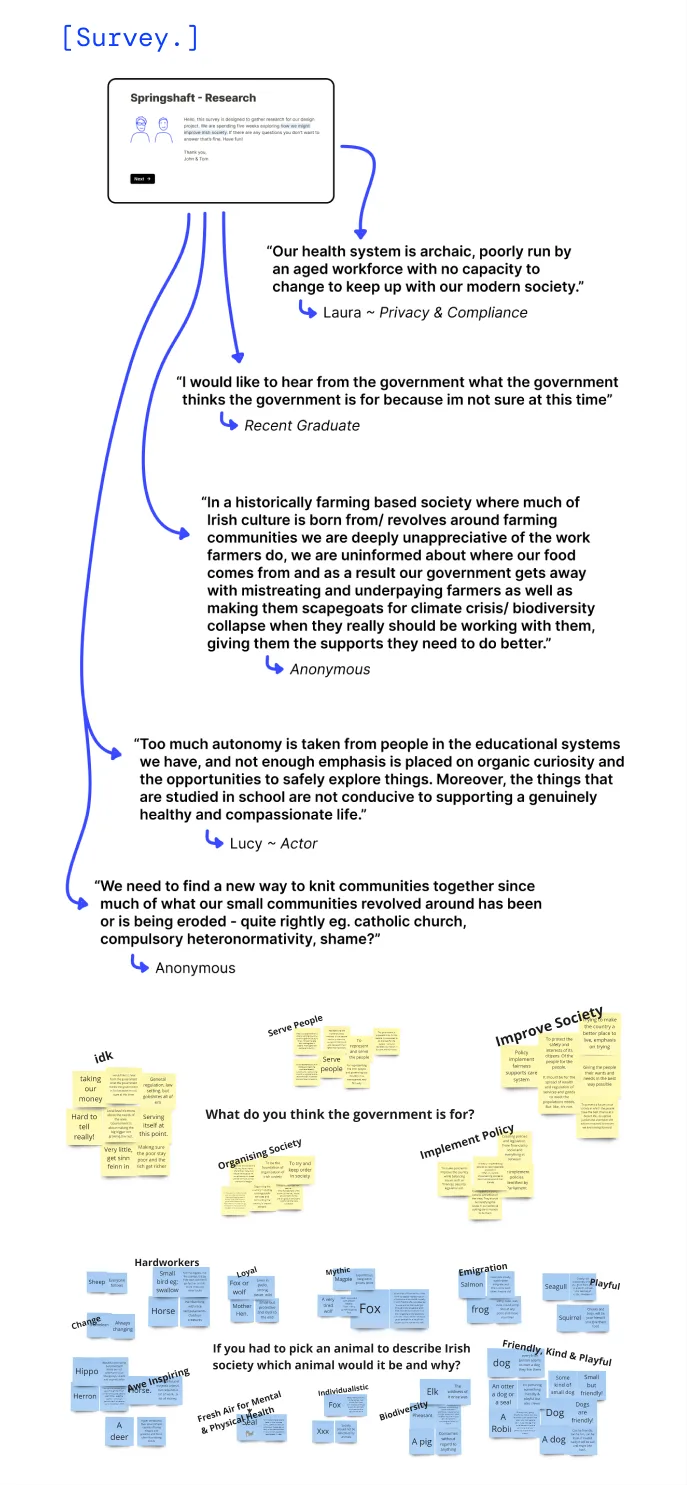
Synthesis & Analysis
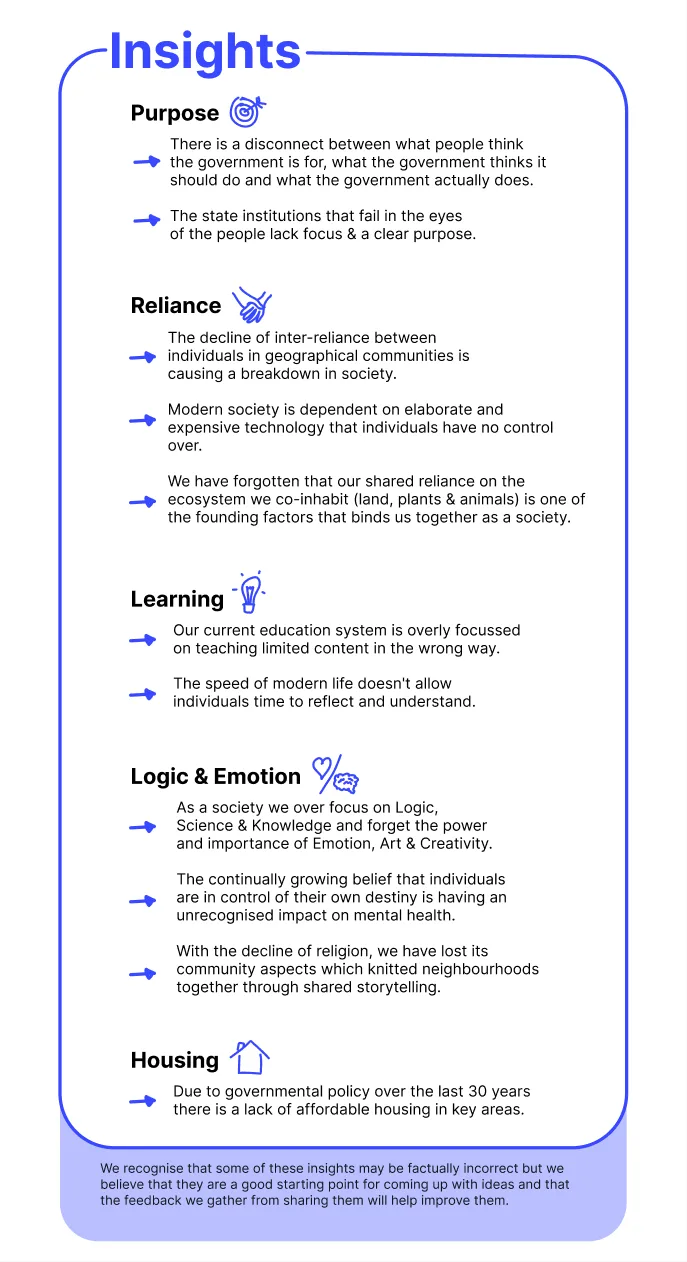
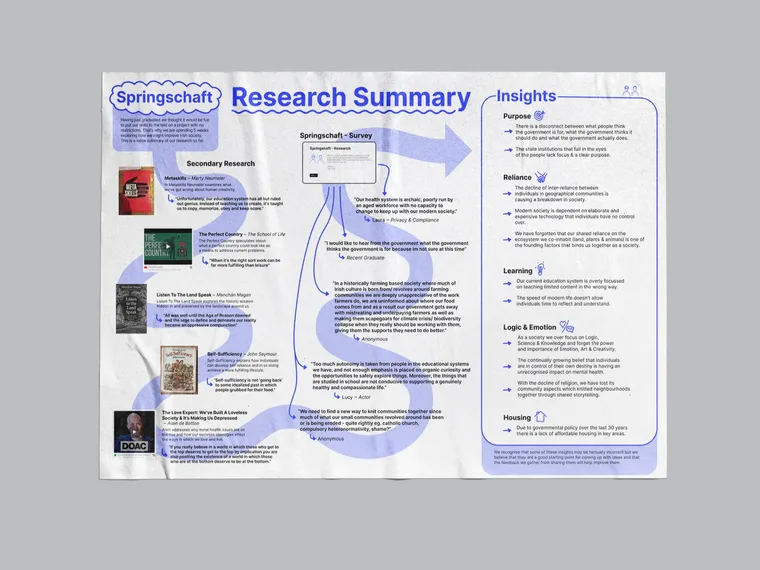
As the research grew, we began organising ideas into themes and searching for relationships between them. Patterns started to emerge around purpose, learning, housing, community, and the tension between logic and emotion.
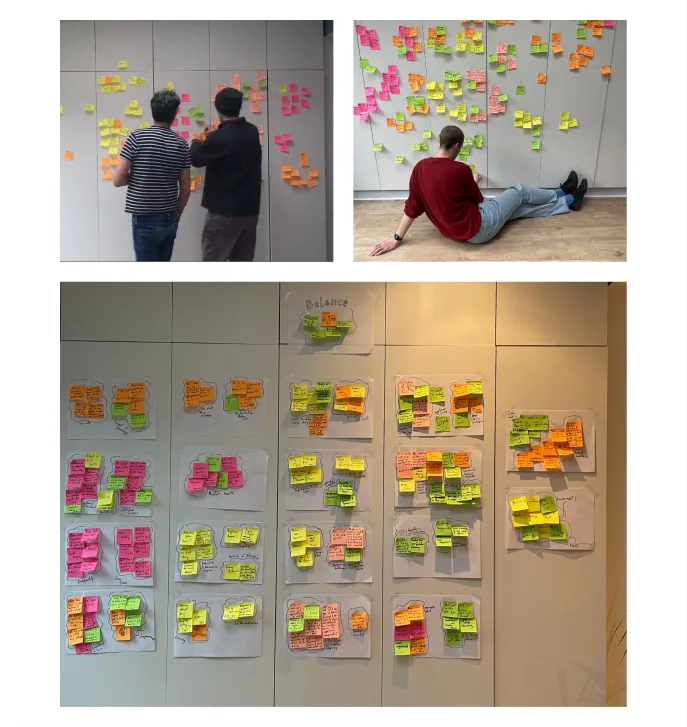
Testing Our Thinking
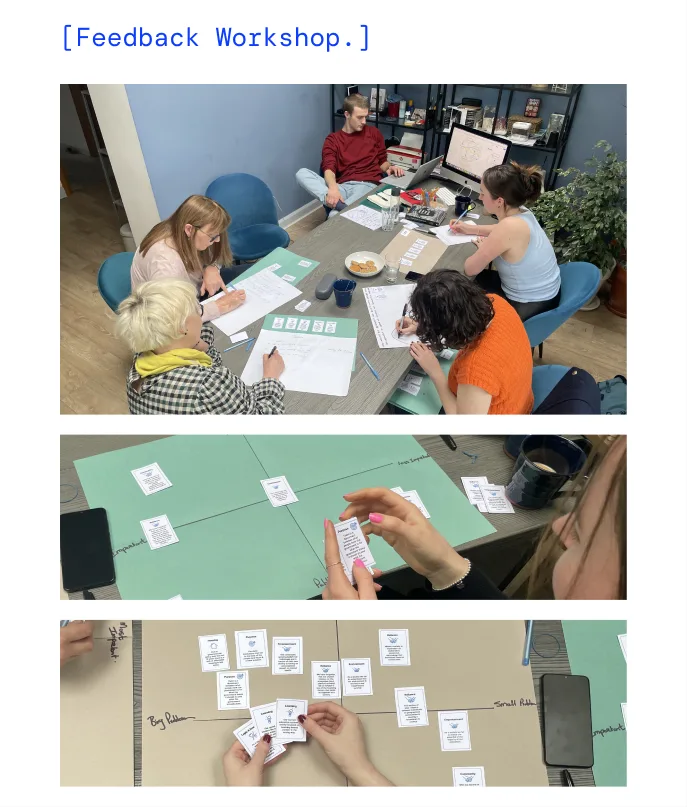
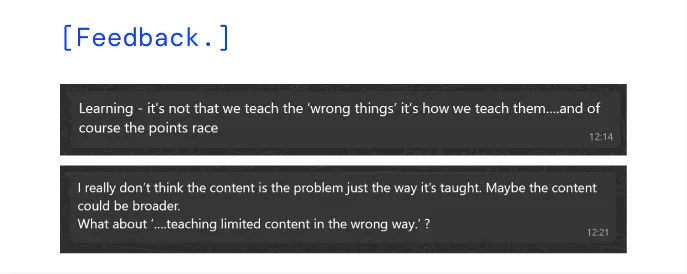
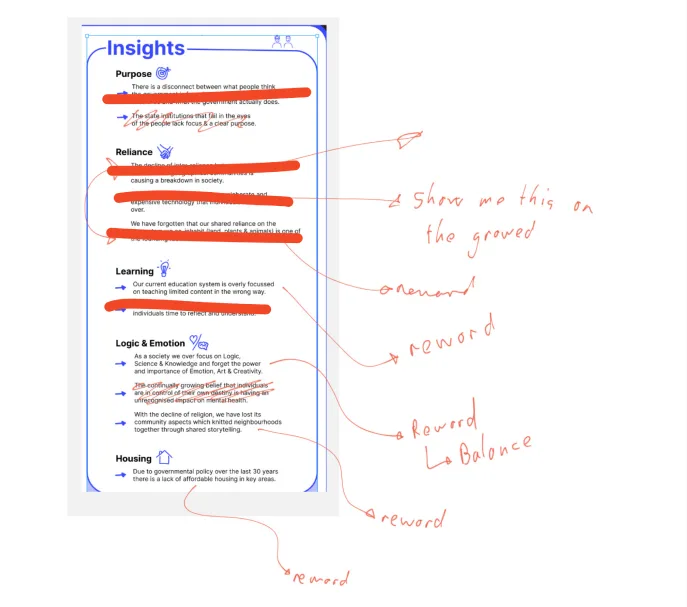
Rather than treating our insights as conclusions, we shared them with others and invited criticism. The conversations helped us challenge assumptions, refine our thinking, and identify what resonated with people's lived experience.
What Is Actually Going On?
Having refined our insights, we stepped back and asked a bigger question.
What is actually going on here?
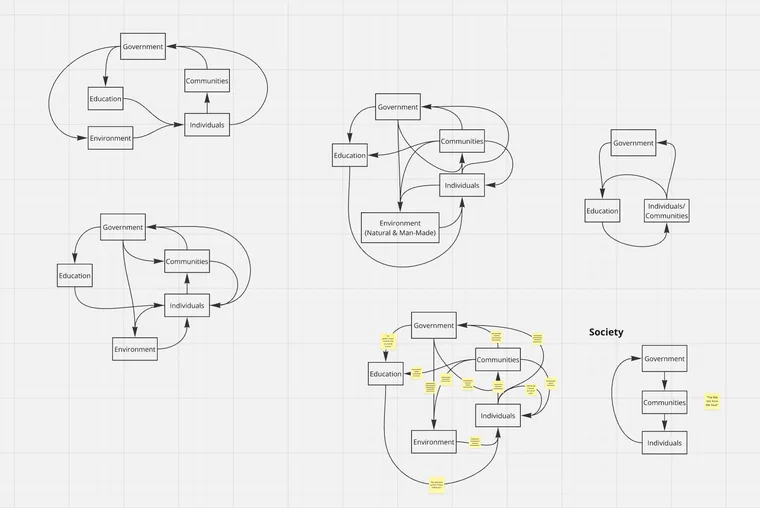
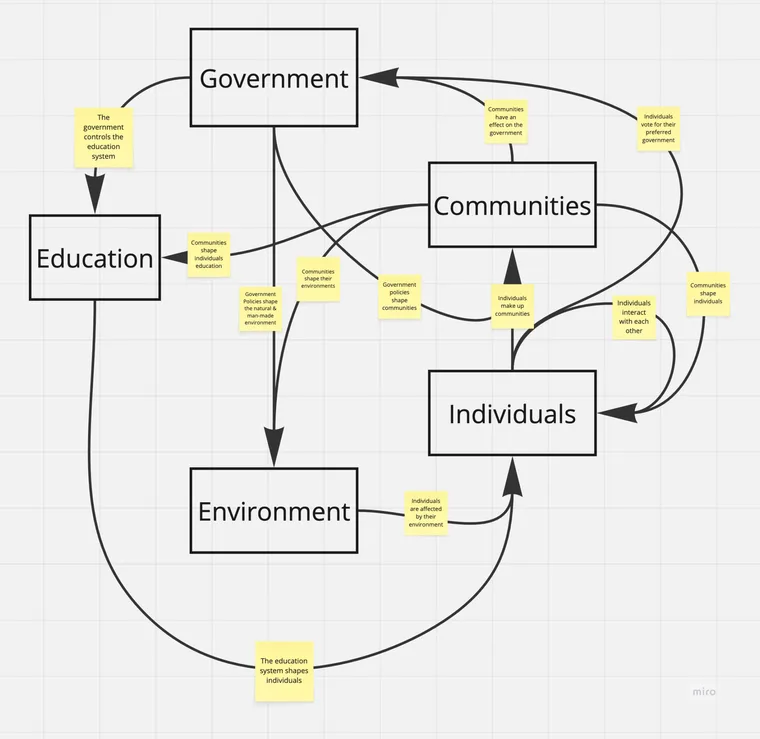
By mapping the relationships between our observations, we began to see a larger system emerge. Problems that initially seemed separate were deeply connected to one another.
[Mapping Systems.]
Communicating the Idea
As we explored potential interventions, we kept returning to the same conclusion.
We did not need a solution yet.
We needed a clearer explanation of the problem.
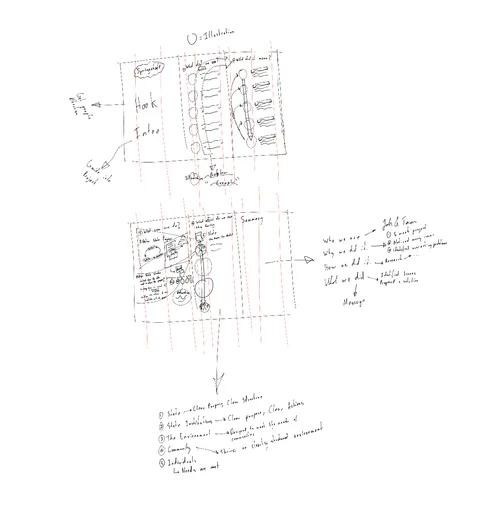
Our focus shifted from designing something new to communicating what we had learned.
[Iteration.]
Deliverables
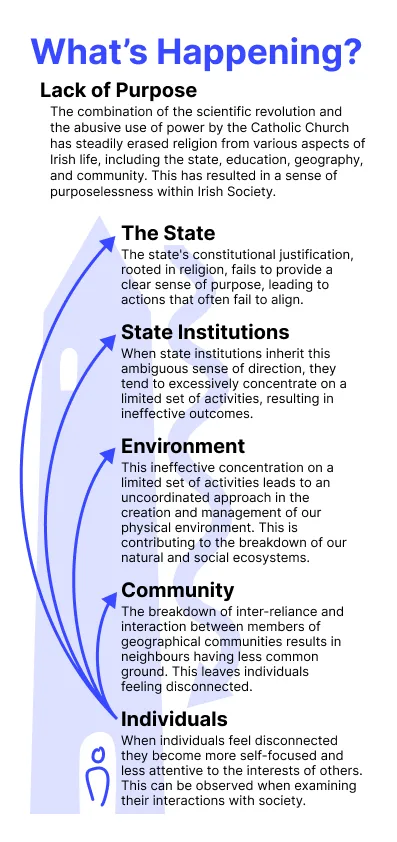
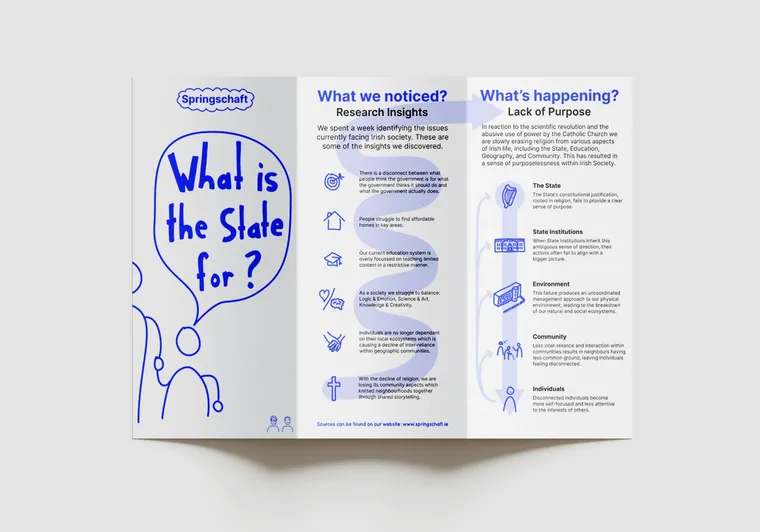
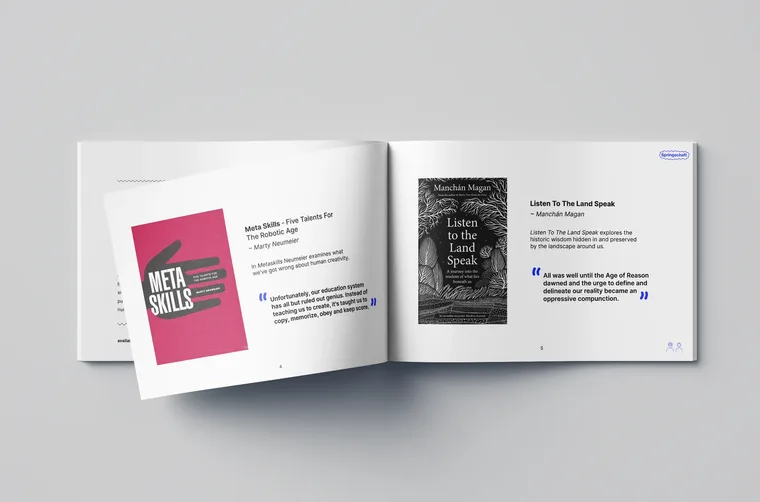
We created a set of artefacts that documented the research and communicated our understanding of the systems shaping Irish society.

Reflection
Springschaft taught me that complex problems rarely exist in isolation.
The more we explored, the more we discovered relationships between people, communities, institutions, and the systems they operate within.
Most importantly, I learned that clarity creates alignment. People can only move forward together when they share an understanding of what is actually happening and what matters most.
Other Projects
The Autumn Society
View project →Hockey Media Belgium
View project →