

Inspiration
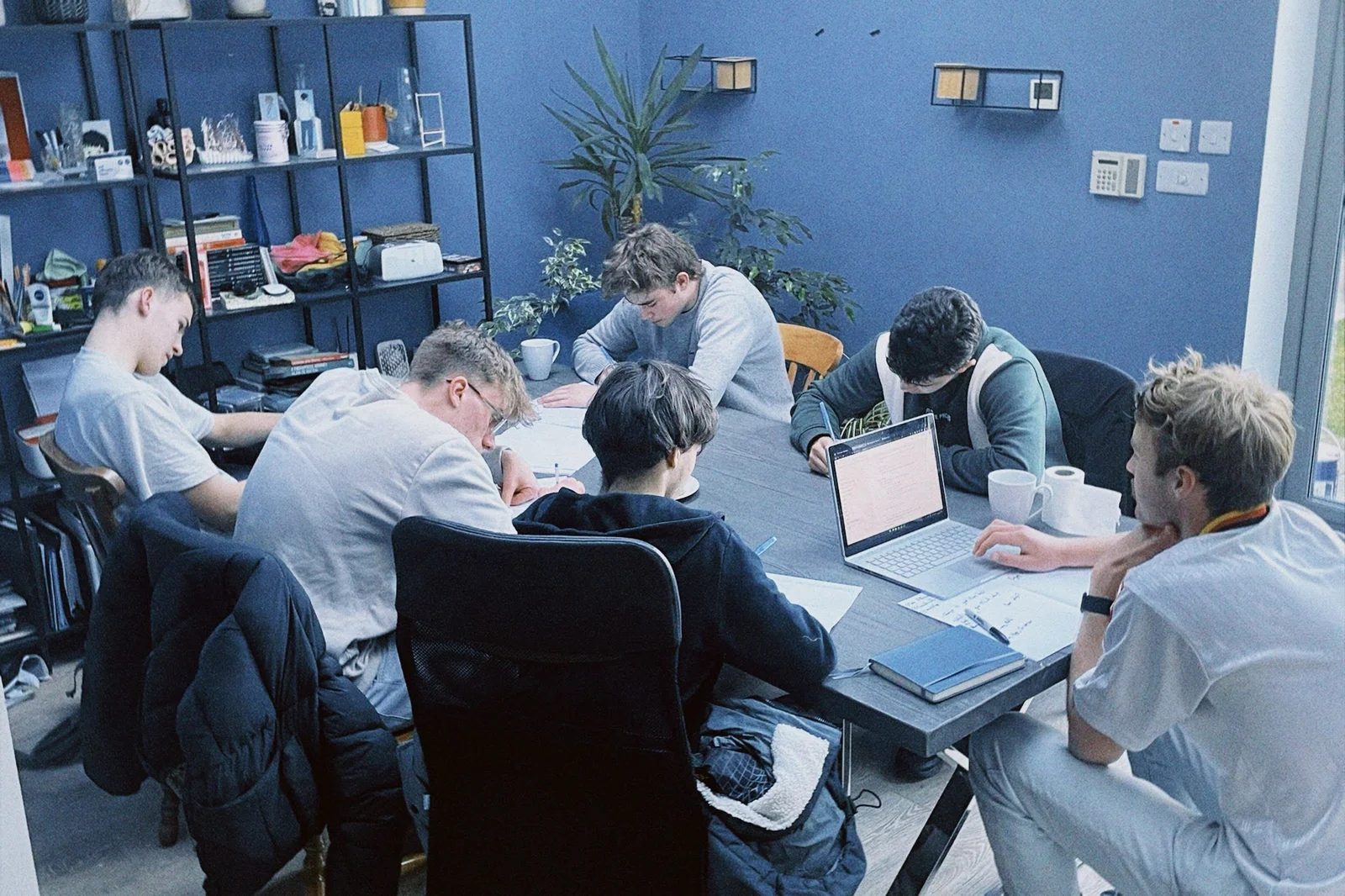
After Springschaft, John and I wanted to work on something more practical. We started with the people we knew best: young adults navigating work, relationships, identity, and the transition into adult life.
Rather than beginning with a solution, we began with conversations.
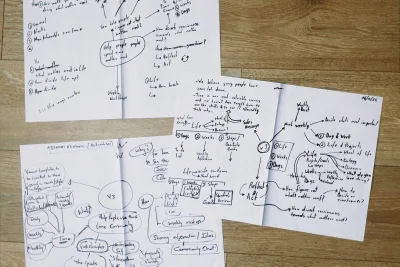
Understanding Young People
We spoke to young people about the challenges they were facing and the things they felt stuck on.
The problems themselves were often straightforward: finding a job, managing relationships, balancing commitments, deciding what to do next.
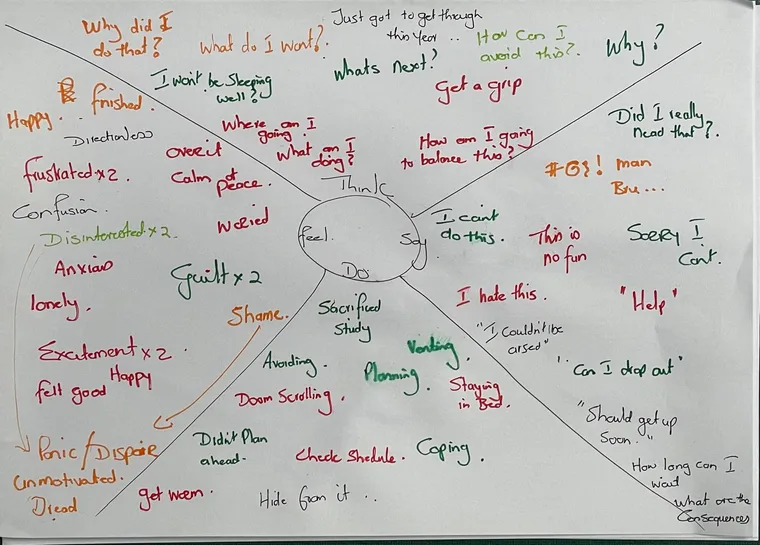
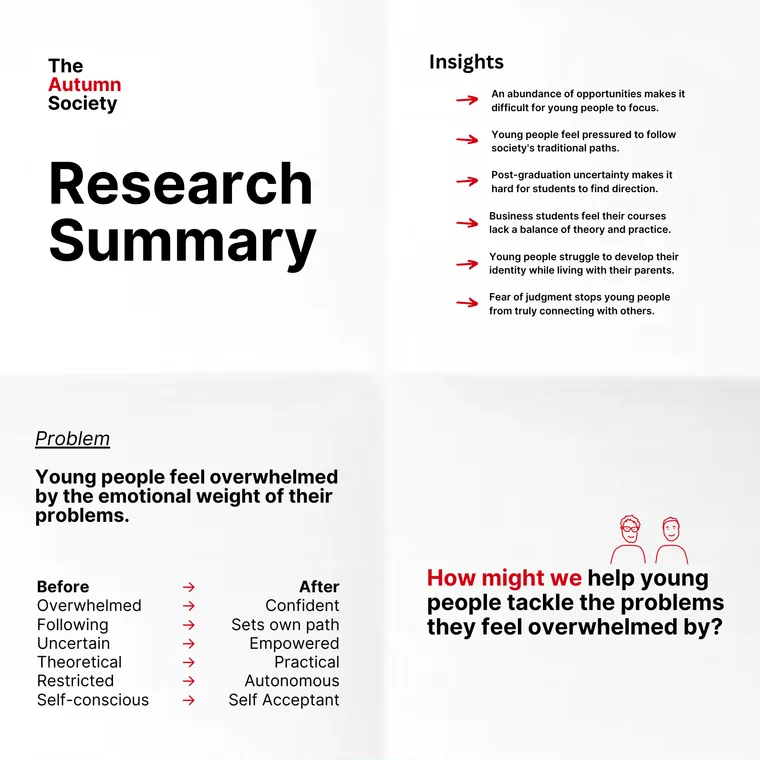
But as we organised our research, a different pattern emerged. The hardest part was rarely the problem itself. It was the fear, uncertainty, and emotional weight surrounding it.
People often knew what needed to happen. They just didn't know how to move through what was holding them back.
[Empathy mapping.]
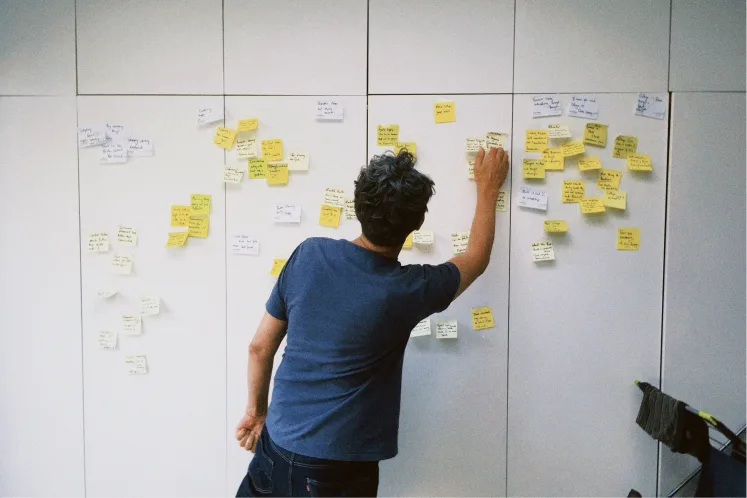
[Affinity mapping.]
[Research summary.]
Exploring Solutions
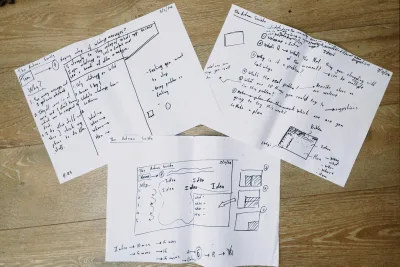
Our first experiments focused on helping people break down challenges into smaller, more manageable steps.
The exercises were useful, but something felt off. Participants often returned to the same issues week after week, even when they already understood what needed to happen.
We realised that practical solutions were only part of the picture. What people needed first was space to understand the emotions, assumptions, and experiences shaping their behaviour.
The goal shifted from solving problems to helping people make sense of them.
[Worksheet, v1.]
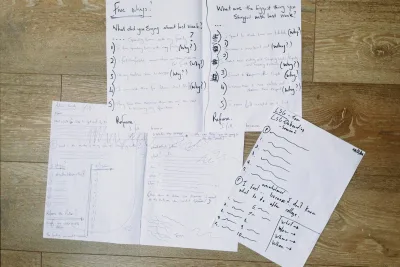
[Guided session, v2.]
Weekly Reflection Workshops
Each week, participants reflected on the highs and lows of the previous few days, explored the experiences that stayed with them, and asked a simple question: why did this matter to me?
Exercises like the Five Whys helped people move beyond immediate frustrations and uncover the beliefs, emotions, and needs underneath them.
The goal was not to fix everything. It was to create a regular practice of reflection and leave with a clearer sense of what mattered most for the week ahead.
[Weekly workshop, v3.]
Testing The Service
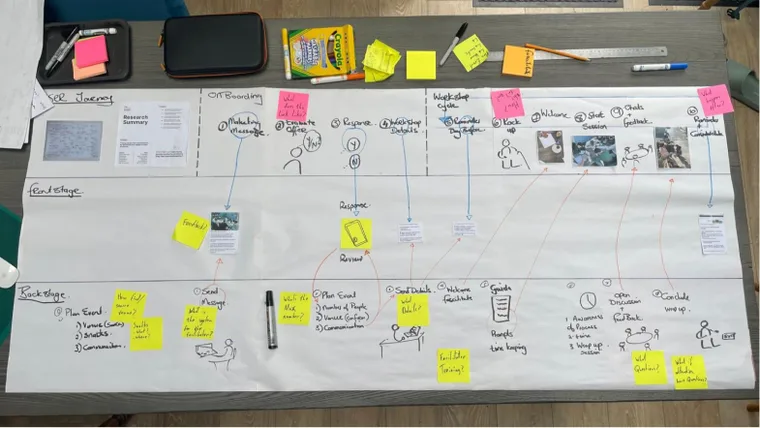
We invited a cohort of five participants to take part in a four-week trial and refined the workshops as we went.
What surprised us most was how willing people were to engage. Reflection wasn't something they resisted. It was something they welcomed.
Small changes made a significant difference. We extended the sessions, improved the environment, simplified activities, and created more space for conversation.
The service evolved through use rather than assumptions. The more we listened, the better it became.
[Service blueprint.]
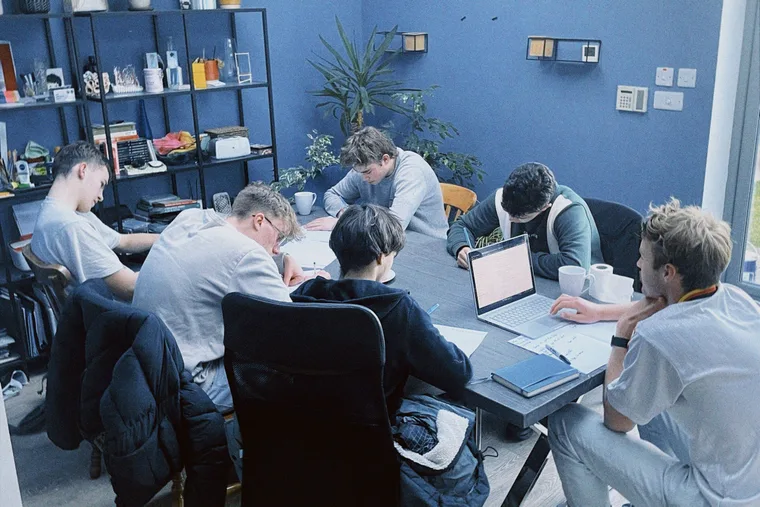
[A workshop in session.]
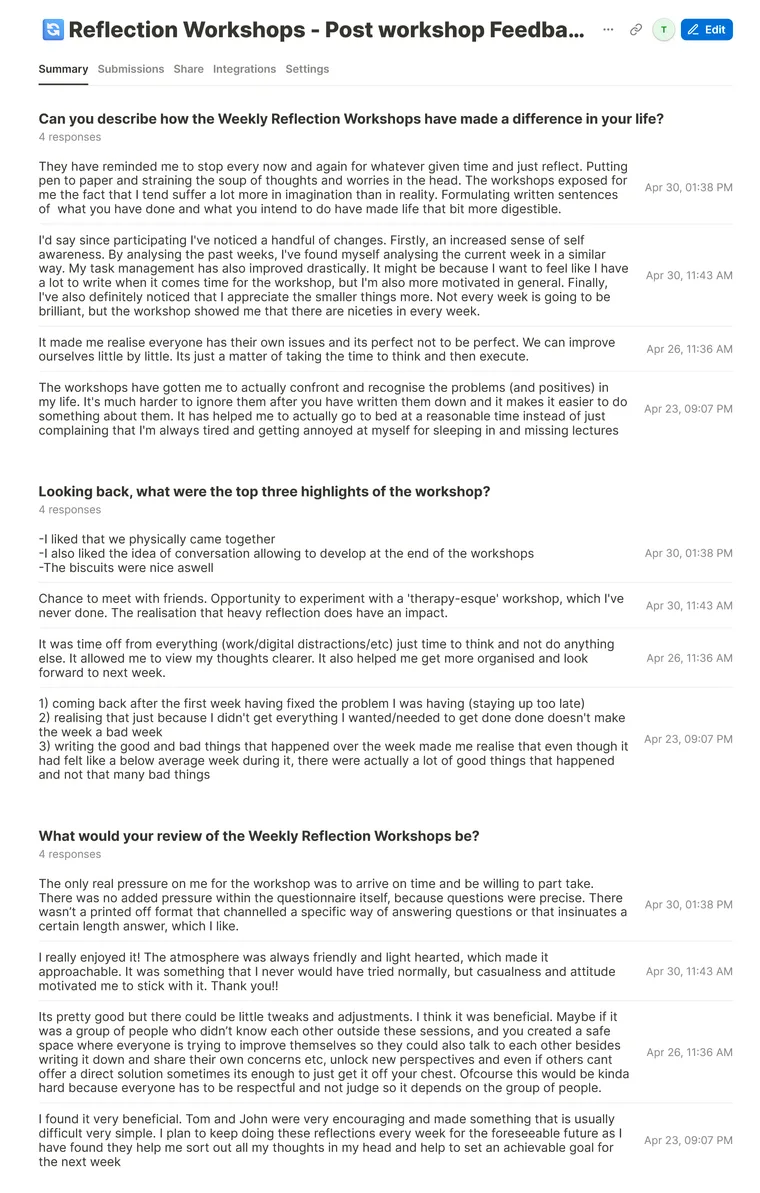
[Participant feedback.]
Building The Identity
As we developed the workshops, we became increasingly aware of how existing self-development tools were presented.
Many felt clinical, overly serious, or disconnected from the lives of the people we hoped to support. Reflection was often treated as something you did because something was wrong.
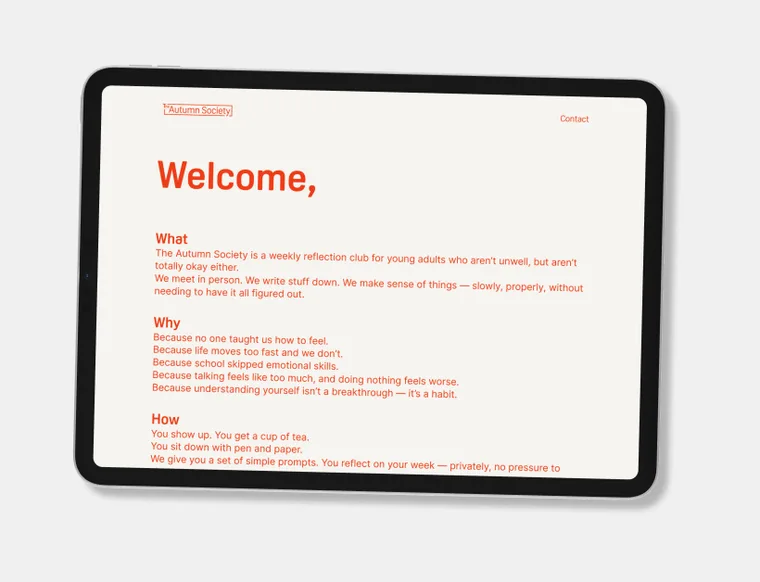
We wanted the opposite. The Autumn Society needed to feel thoughtful, welcoming, and something people would be proud to take part in.
The identity became part of the experience itself.
[Logo exploration.]
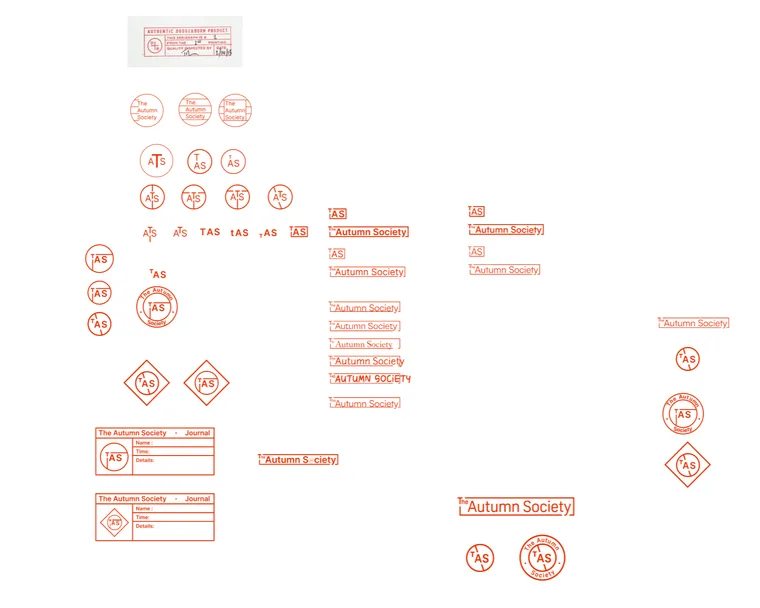
[Logo system.]



What Participants Valued
People did not come for advice. They came for space to think.
The structure mattered, but the atmosphere mattered just as much. Reflection became easier when it felt welcoming, informal, and shared with other people.
[Alastair.]
“I found it very beneficial. Tom and John were very encouraging and made something that is usually difficult very simple. I plan to keep doing these reflections every week for the foreseeable future as I have found they help me sort out all my thoughts in my head and help to set an achievable goal for the next week”
[Tuna.]
“It was time off from everything (work/digital distractions/etc) just time to think and not do anything else. It allowed me to view my thoughts clearer. It also helped me get more organised and look forward to next week.”
[Conrad.]
“I really enjoyed it! The atmosphere was always friendly and light hearted, which made it approachable. It was something that I never would have tried normally, but casualness and attitude motivated me to stick with it. Thank you!!”
[Anonymous.]
“The workshops have reminded me to stop every now and again for whatever given time and just reflect. Putting pen to paper and straining the soup of thoughts and worries in the head.”
Reflection
Autumn Society taught me that helping people is rarely about solving their problems for them.
It's about creating the space, trust, and structure that allows them to move forward on their own terms.
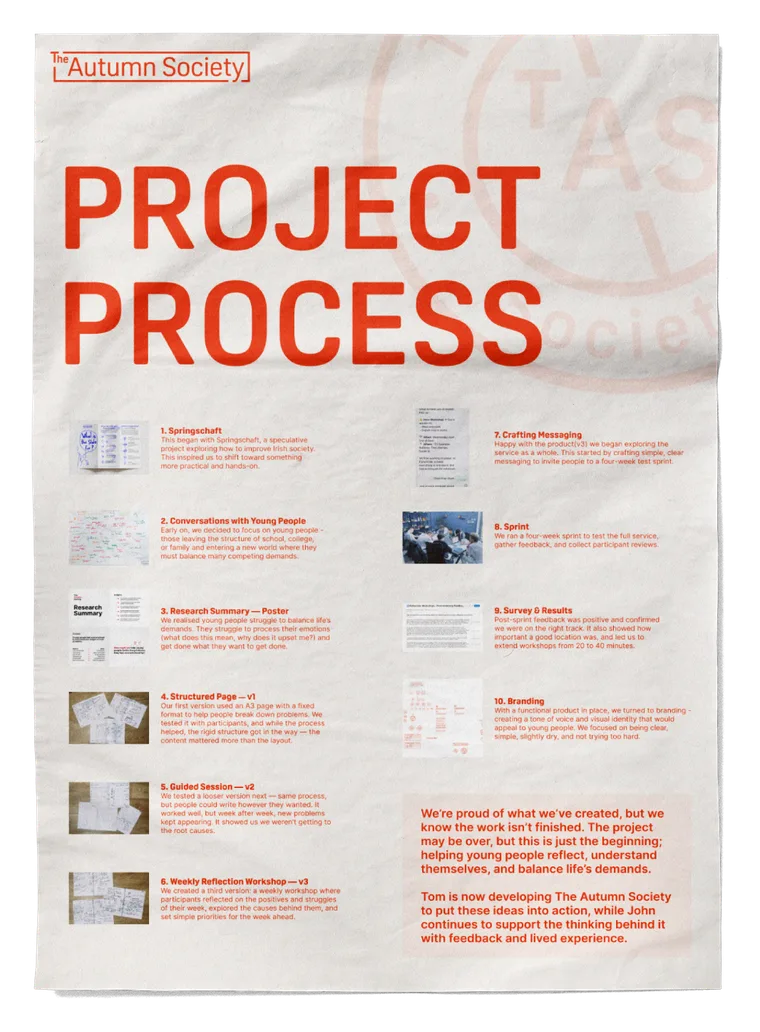
[Process poster.]
Other Projects
Springschaft
View project →Hockey Media Belgium
View project →